

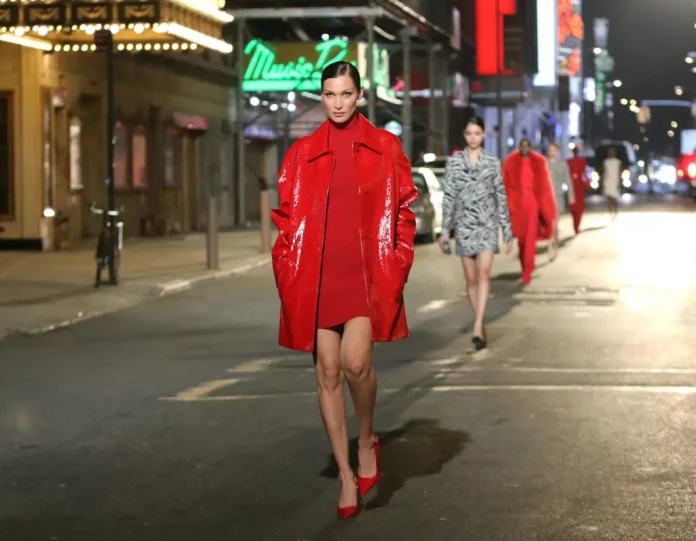
In the hallowed, dimly lit halls of the Grand Palais or the minimalist white boxes of Milan, a single garment can ignite a global wildfire. Whether it is a cerulean sweater or a pair of gravity-defying “Arclight” sneakers, the journey from the elite runway to the suburban wardrobe is governed by one of the most enduring and controversial mechanisms in the industry: the Trickle-Down Theory.
For the modern connoisseur, understanding the trickle-down effect is like seeing the Matrix of style. It is the invisible hand that translates the avant-garde dreams of a creative director into the ubiquitous reality of the high street. But in an era of TikTok “cores” and ultra-fast fashion, this classic theory is undergoing a radical, high-speed metamorphosis.
Origin of Theory
The trickle-down theory isn’t just fashion; it’s sociology. Born from the observations of 19th-century thinkers like Georg Simmel and Thorstein Veblen, the theory posits that fashion is a vertical game of chess. At the top, the “leisure class” adopts new, often extravagant styles to signal their status and exclusivity. As Veblen famously noted in The Theory of the Leisure Class (1899), this is “conspicuous consumption” at its finest. Once the lower social strata begin to imitate these styles, seeking a slice of that perceived prestige, the elite class promptly abandons the look. Why? Because the moment a trend becomes accessible, it loses its “distinction.”
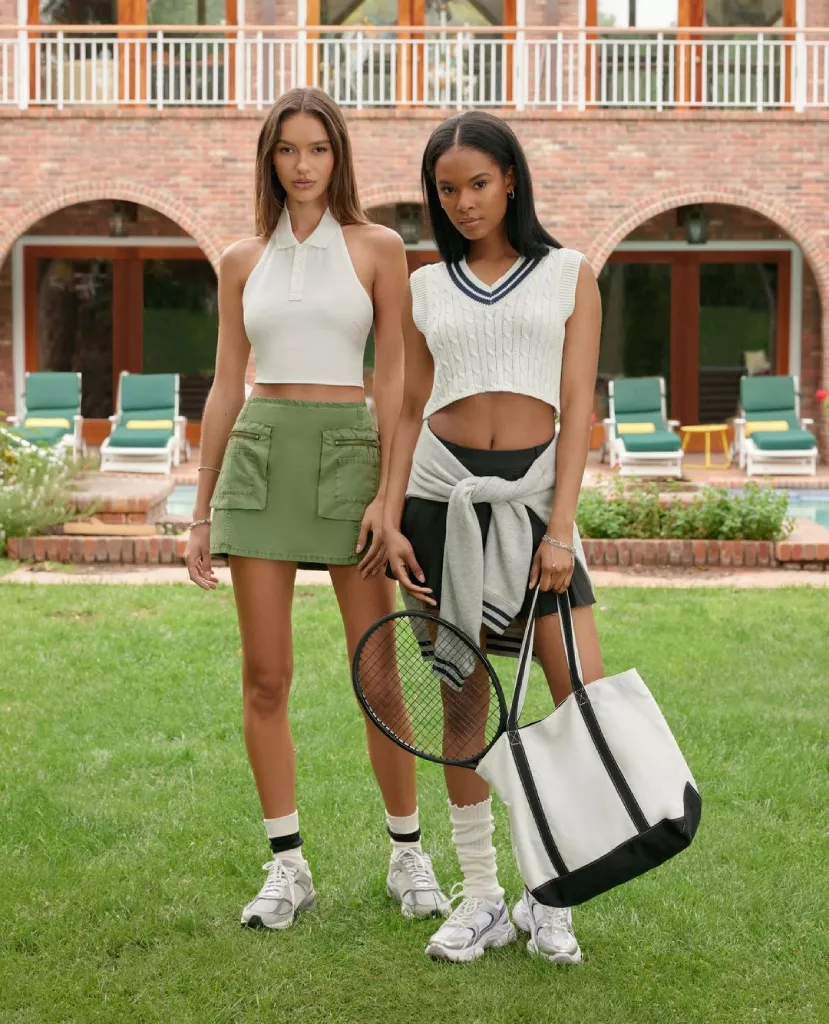
Historically, this cycle took years. A silhouette debuted in Paris, traveled to the boutiques of New York, and eventually, after seasons of dilution, reached the department stores of Middle America.
The “Devil Wears Prada” Moment: A Case Study in Color
Perhaps no piece of pop culture explains the trickle-down effect more sharply than Miranda Priestly’s legendary “Cerulean” monologue in The Devil Wears Prada. When her assistant Andy snickers at two identical-looking belts, Priestly meticulously traces the history of Andy’s “lumpy blue sweater.”
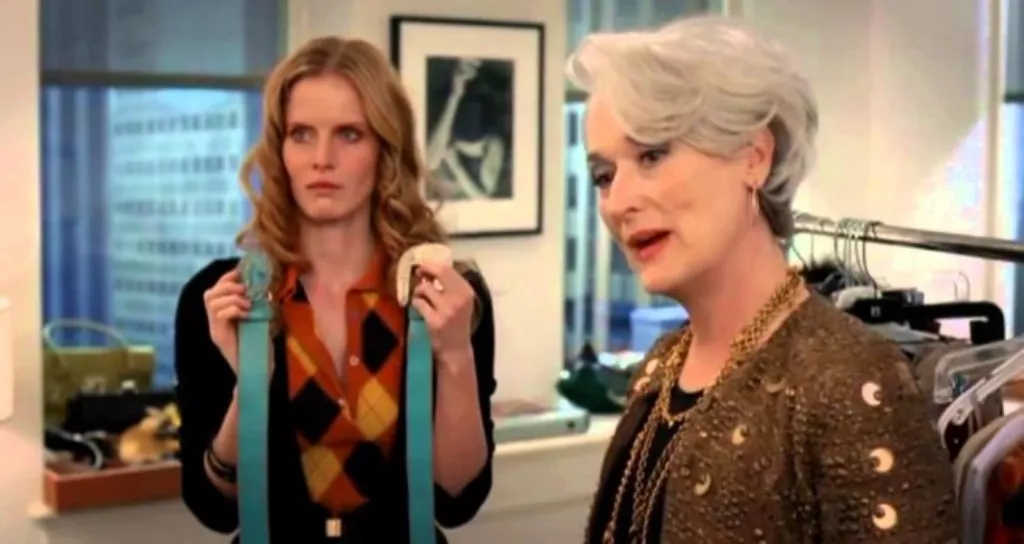
She explains how Oscar de la Renta first showed a collection of cerulean gowns in 2002, followed by Yves Saint Laurent and eight other designers. Soon, the color filtered through the “secondary market,” eventually landing in a “tragic Casual Corner” where Andy bought it on sale. This is the trickle-down effect in its purest form: a top-down dictate that eventually clothes the masses, whether they realize it or not.
The Modern Engine: From “Arclight” to the High Street
In the 21st century, the theory has found new legs in the world of luxury streetwear. Take the “Dad Sneaker” phenomenon. In 2018, Louis Vuitton debuted the Arclight Sneaker, a polarizing, futuristic, oversized silhouette priced at nearly $1,100. It was the ultimate status symbol for the early adopters and the front-row elite.
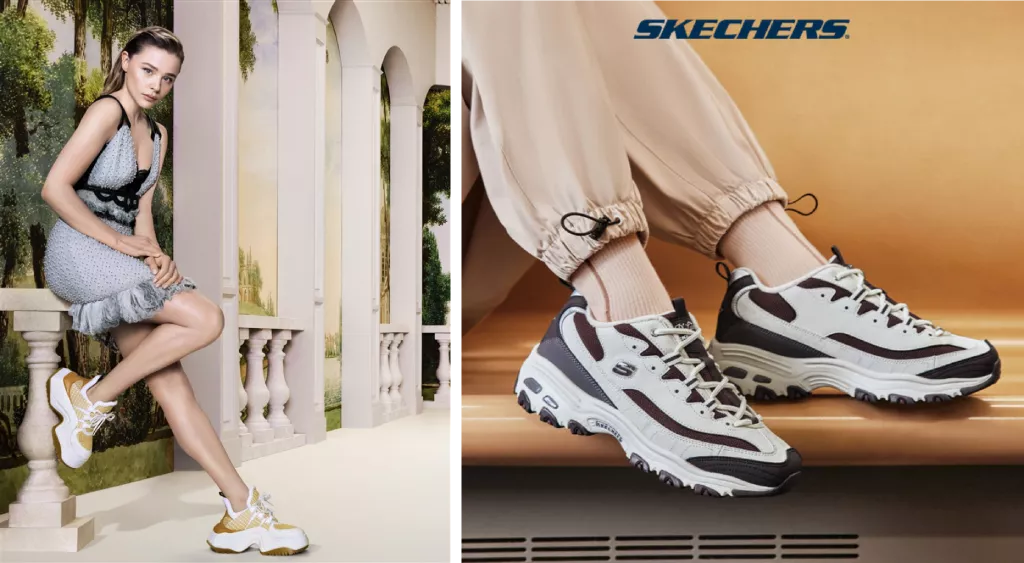
The trickle-down effect kicked in with ruthless efficiency. Soon, premium brands like Nike and Balenciaga offered their own iterations. Eventually, mass-market giants like Fila and even budget-friendly retailers like Sneakers released bulky, “dad” silhouettes for a fraction of the price. Today, you can find a version of that LV-inspired silhouette in a big-box store for as low as $20. The trend has trickled all the way to the floor, at which point luxury houses have already pivoted to the next “it” shoe.
The Digital Disruption: Trickle-Down at Warp Speed
However, the classic vertical flow is under siege. In the 1950s, the “Trickle-Across” theory emerged, suggesting that mass media allows trends to spread horizontally across all social classes simultaneously. Today, social media has turned that “trickle” into a flash flood.
Fast-fashion titans like Zara and Shein no longer wait for the “secondary market” to adapt a runway look. Using AI-driven trend forecasting, they can identify a silhouette on the runway in Paris and have a “dupe” ready for shipment in less than two weeks. This “ultra-fast trickle” has condensed the traditional 20-year fashion cycle into a 20-day sprint.
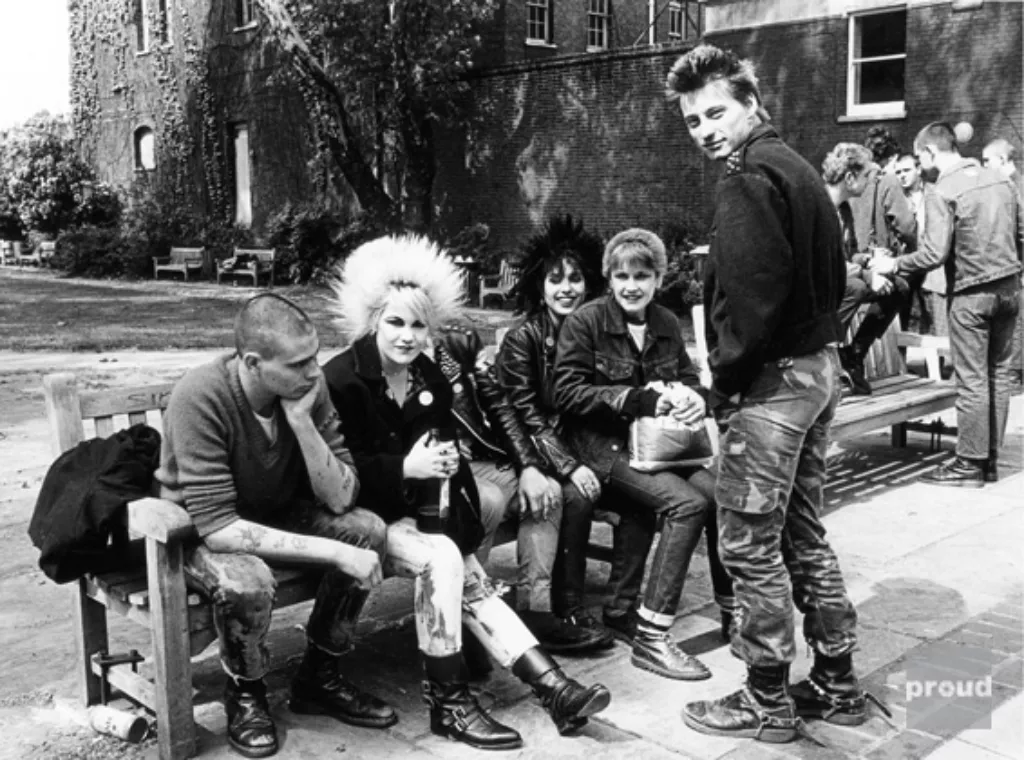
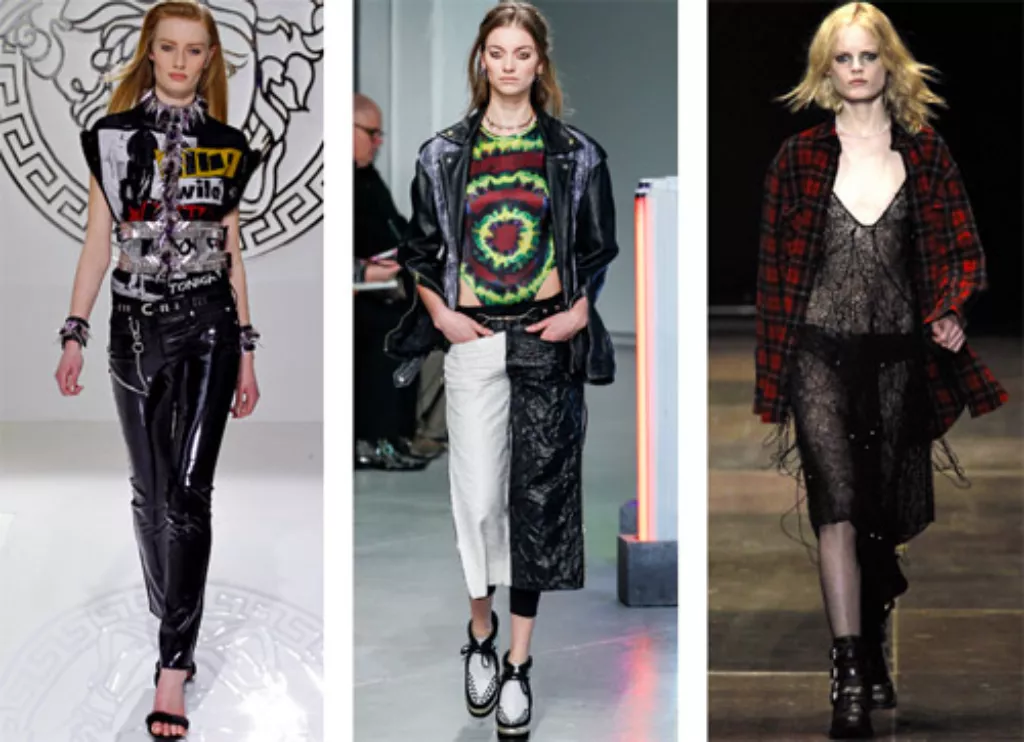
Moreover, we are seeing the rise of the Trickle-Up Effect. This is where the street dictates to the runway. Think of the T-shirt, denim, or the gritty aesthetics of the ’90s grunge movement. These styles originated in subcultures and working-class wardrobes before being elevated by designers such as Marc Jacobs and Vivienne Westwood.
The Future: A “Trickle-Round” Economy?
As we move toward 2025, the fashion hierarchy is becoming more circular than pyramidal. We are witnessing a “Trickle-Round” phenomenon, where high-end designers like Miuccia Prada or Demna Gvasalia at Balenciaga intentionally adopt “low-brow” or “ugly” aesthetics like trucker hats or utilitarian workwear as a form of “ironic luxury.” This creates a fascinating paradox. The elite are now distinguishing themselves not by being more formal, but by being “authentically” casual, forcing the masses to play catch-up with an aesthetic that was originally theirs.
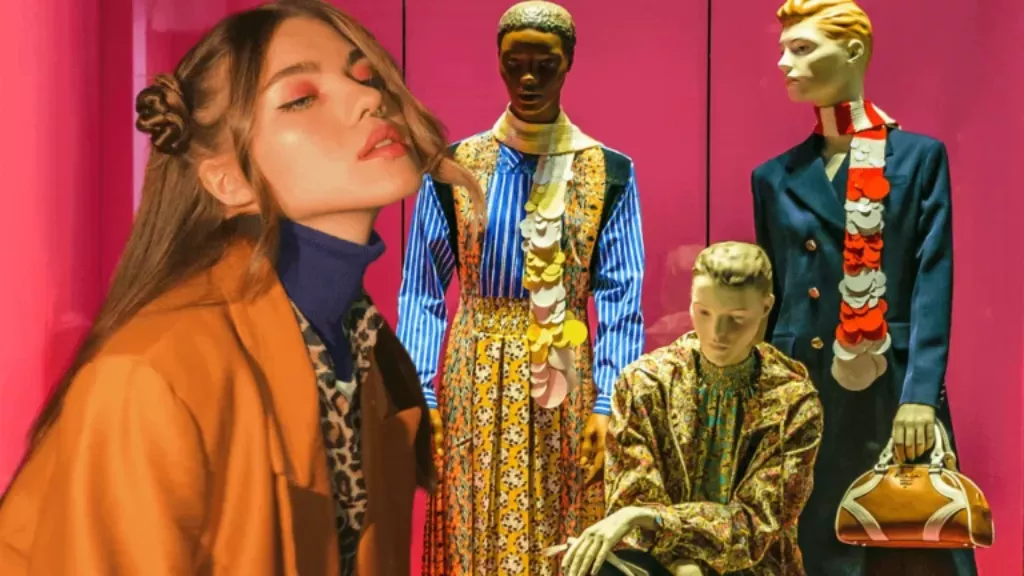
The trickle-down theory is more than just a history lesson; it’s a guide to navigating the current climate of overconsumption. When we understand how a trend cascades, we gain the power to choose: do we chase the rapid-fire imitations of the high street, or do we invest in the original vision that started the conversation?
In a world where everyone can wear the “look,” the true luxury lies in the story, the craftsmanship, and the timing. The trickle-down effect ensures that fashion is democratized, but it also reminds us that the spirit of couture is always one step ahead, perpetually chasing the next horizon of the avant-garde.
References
- https://glamobserver.com/what-is-the-trickle-down-theory-in-fashion/
- https://www.iiad.edu.in/the-circle/decoding-trickle-down-theory-from-high-end-trends-to-mainstream-styles/
- https://commelenoire.wordpress.com/2013/11/06/fashions-trickle-up-trickle-down-theory/
- https://en.wikipedia.org/wiki/Trickle-down_fashion
- https://mega-asia.com/fashion/from-couture-to-casual-the-trickle-down-effect/
- https://www.linkedin.com/pulse/flow-fashion-tracing-trickling-movements-gmg-trading-llc-dubai-wabqf/
- https://www.strikemagazines.com/blog-2-1/trickle-down-fashion
- https://gossip-stone.com/zara-how-did-a-brand-that-copies-luxury-surpass-luxury-brands-in-relevance-and-popularity/