

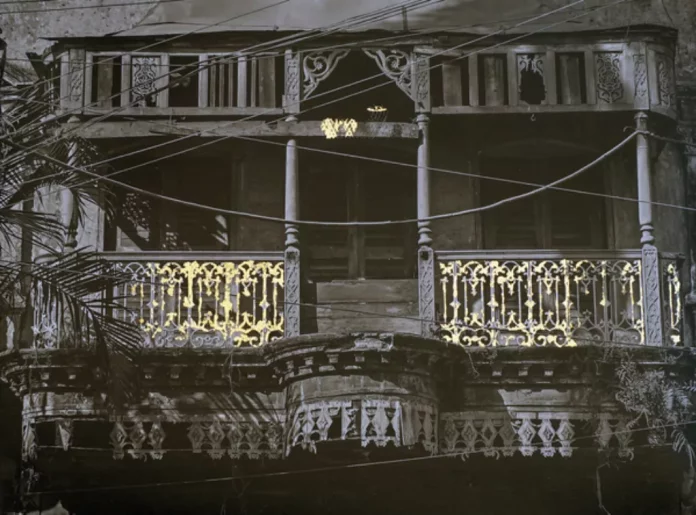
Visual art serves as both a mirror and a catalyst for societal reflection. In Bangladesh, a nation profoundly shaped by linguistic revolutions, diasporas, and ecological shifts, a new vanguard of visual artists is redefining the cultural landscape. Moving beyond the romanticism of early traditions, these contemporary creators interrogate the intersections of memory, resistance, climate, and urban identity. Their methodologies spanning soft sculpture, video installations, and digital abstraction articulate a nuanced philosophy of existence in South Asia. Archiving the ephemeral and critiquing the institutional, their works offer a factually grounded lexicon for the modern era.
The following seven Bangladeshi visual artists command attention for the profound conceptual frameworks anchoring their aesthetic endeavors.
Najmun Nahar Keya
Utilizing material heritage to orchestrate profound dialogues around gender, climate, and historical erasure, Najmun Nahar Keya transforms antique Tangail saris dyed in sage and indigo into cascading, soft-sculptural representations of Bengali script. This visual poetry draws from the legacy of Khana, a medieval Bengali poet whose tongue was severed to silence her intellectual prowess.
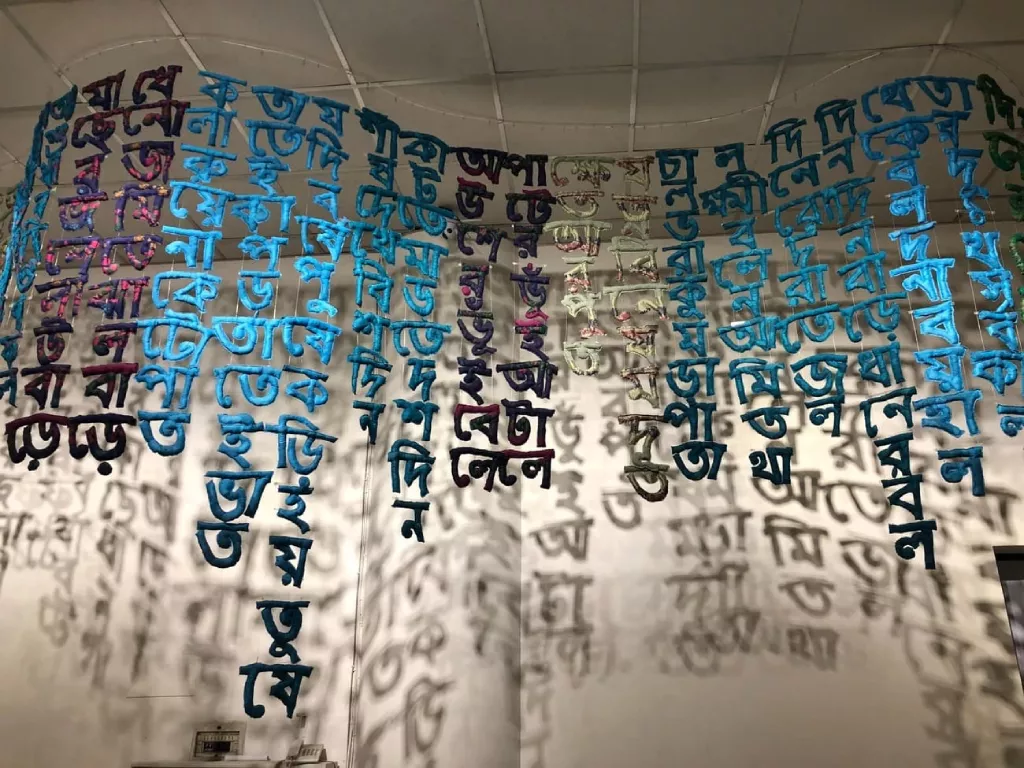
Keya’s practice does not just pay homage; it is a meticulous restoration of female agency within patriarchal paradigms. By allowing these suspended fabrics to sway with ambient drafts, she visually captures the fragility of cultural memory amidst an accelerating climate crisis. Her highly photogenic installations cast dappled shadows that turn language into an atmospheric experience.
Kamruzzaman Shadhin
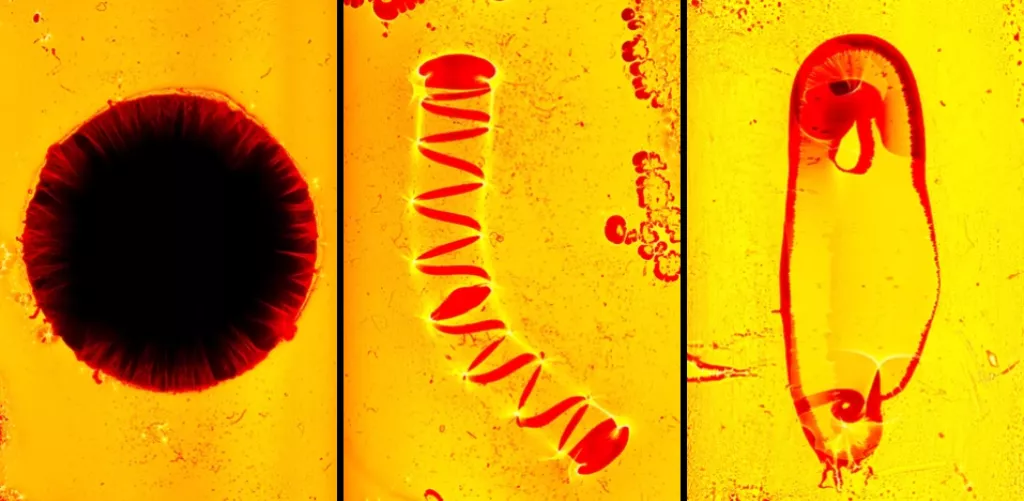
Addressing the slow violence of ecological degradation, Kamruzzaman Shadhin creates deeply grounded, chimeric manifestations of a changing agrarian reality. Rather than dramatic depictions of natural disasters, his focus remains on the methodical decimation of land through mass cultivation. His multimedia installations often feature striking video projections alongside sculptural forms.
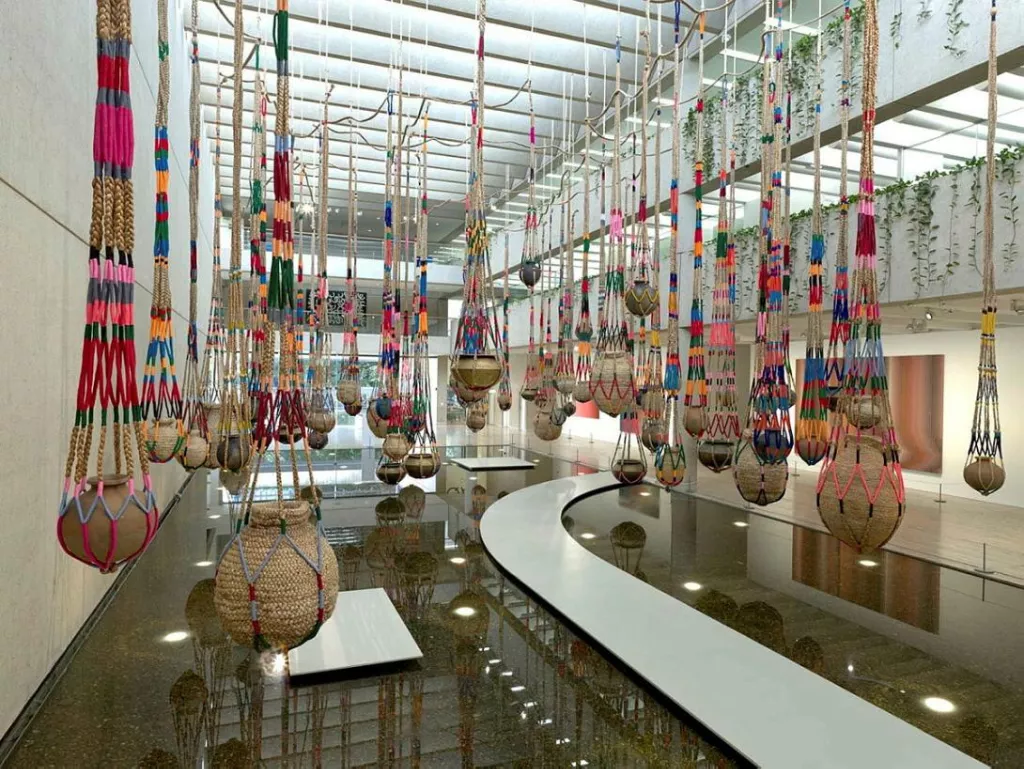
These entities, adorned in ceremonial textiles and animal heads, represent the ghosts of indigenous rituals permanently displaced by modern agricultural economics. Shadhin’s creative journey is one of deep ecological observation; his work forces viewers to confront the leaching of the earth’s vitality. The resulting documentation is stark and haunting, offering arresting imagery that exposes the severe disconnect between humanity and the natural environment.
Istela Imam
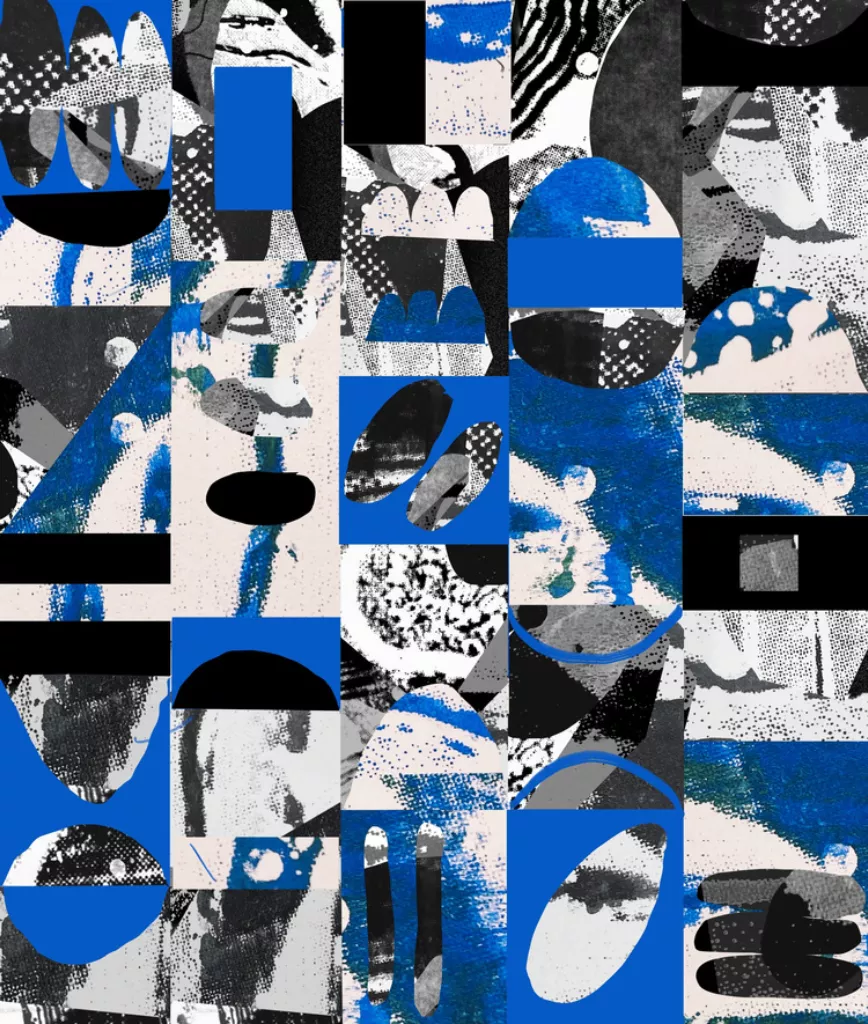
Operating from the dense chaos of Dhaka, Istela Imam navigates the spatial and emotional topography of the modern South Asian metropolis. As an illustrator and collagist, her visual language is constructed from paint, found paper, xerox transfers, and experimental Bengali typography.
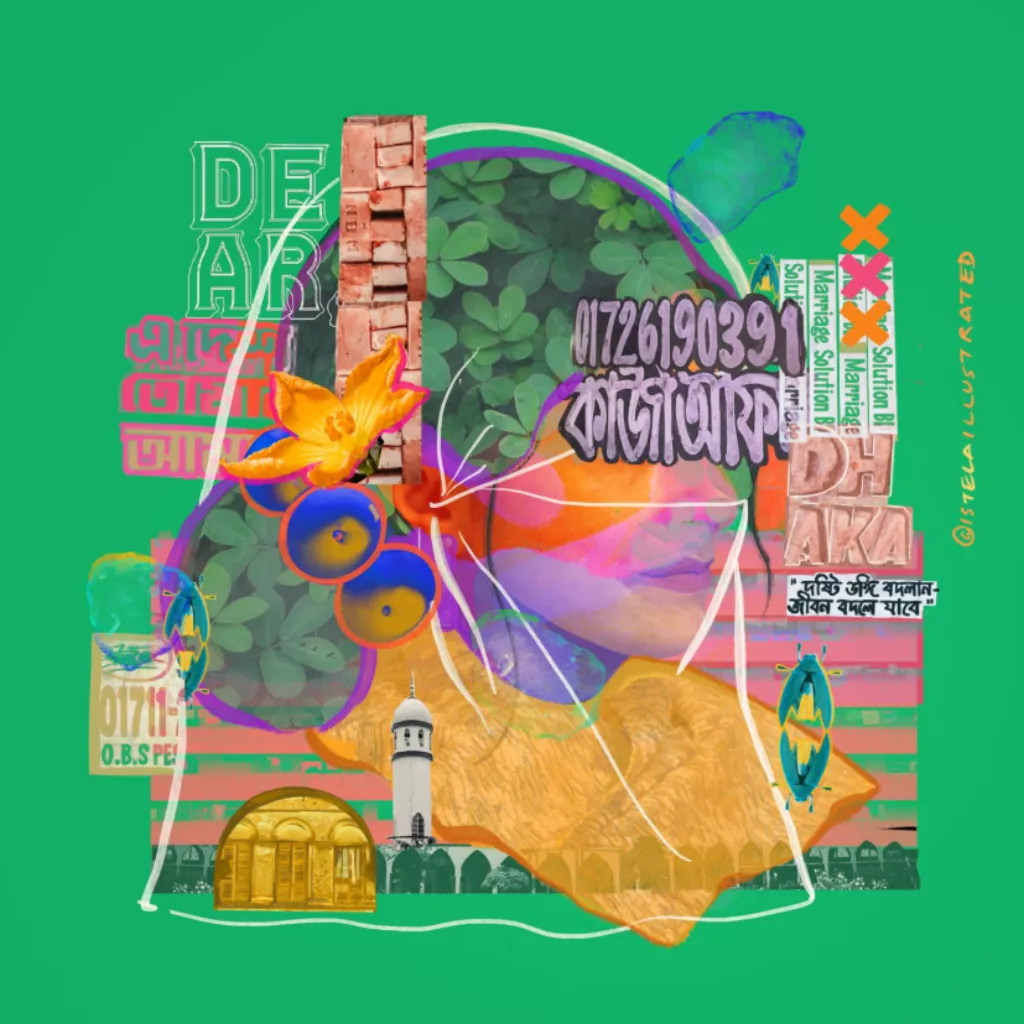
Imam’s philosophy centers on translating the quotidian reality of navigating societal norms into a layered, surrealist commentary. Her practice is a rigorous archiving of memory, distance, and longing, stripping away idealized versions of urban life to reveal a more complex truth. The artworks are visually dense and vibrant, providing striking, high-contrast imagery that captures the essence of contemporary Dhaka.
Debashish Chakrabarty
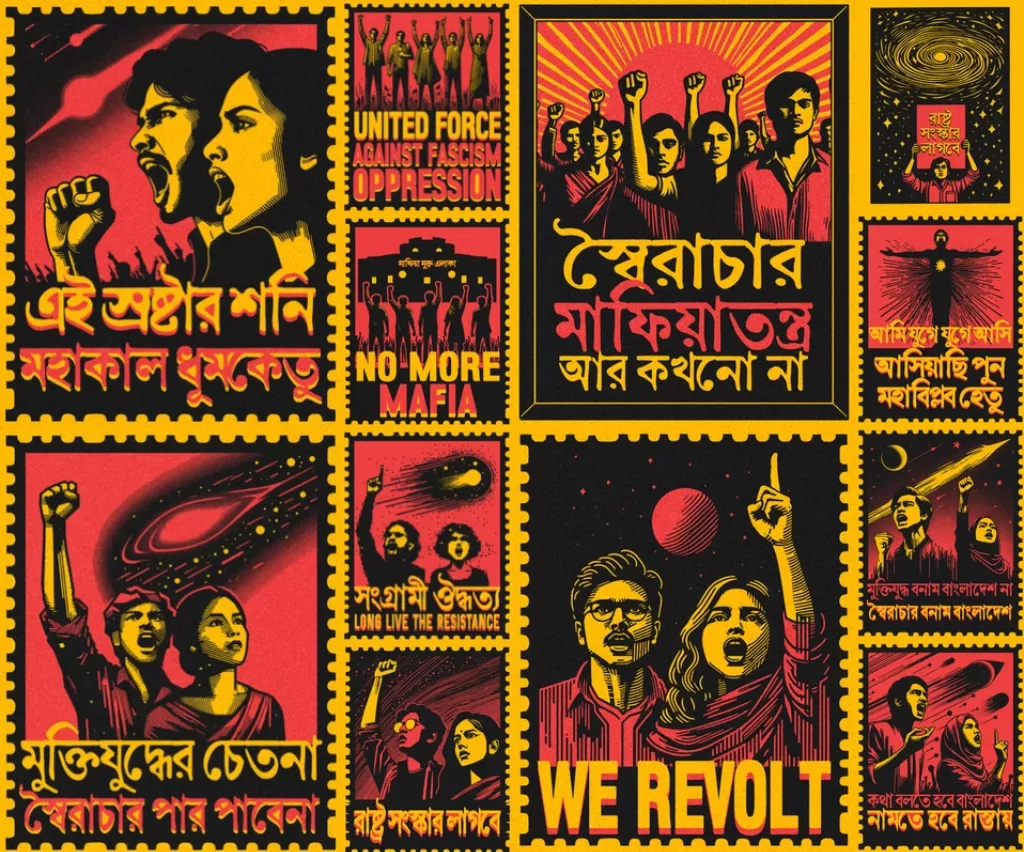
Debashish Chakrabarty expands the traditional boundaries of photography, treating the lens as an instrument of social inquiry and civil imagination. Tethered to Bangladeshi political movements, his work interrogates state mechanisms and power structures. Chakrabarty’s aesthetic relies on optical experimentation, blending documentary rigor with conceptual abstraction.
His philosophy posits that the visual field is a primary site of resistance, a concept realized when his politically charged posters became defining visual anchors during recent national uprisings. His journey reflects a commitment to testing the photographic medium’s limits, transforming fleeting moments of defiance into permanent records. The high-impact, graphic nature of his compositions guarantees visually arresting reproductions, solidifying his relevance in global discourse through bold, unapologetic statements.
Lamees Rahman
In an era defined by the overwhelming accumulation of data, Lamees Rahman utilizes printmaking and digital media to perform acts of profound neutralization. She sources her material directly from the sociocultural ether like news articles, emails, photographs, and political manifestos and subjects them to rigorous cycles of digital and visual translation.
Her journey is an intentional abstraction of reality, reducing polarized, hierarchical information into layered assemblages of dots and lines. Rahman’s philosophy is rooted in the belief that rendering information illegible strips it of its oppressive weight, allowing the viewer to experience an alternate, egalitarian reality. Her large-scale prints are a masterclass in texture, offering mesmerizing visuals that challenge our relationship with modern media structures.
Farah Khandaker
Farah Khandaker bridges the gap between commercial art direction and deeply personal surrealism. As a digital artist who transitioned from Bangladesh to Toronto, her work is heavily imbued with the psychology of the diaspora. Khandaker’s visual identity is defined by an uncompromising use of bold colors, precise typography, and nostalgic motifs.
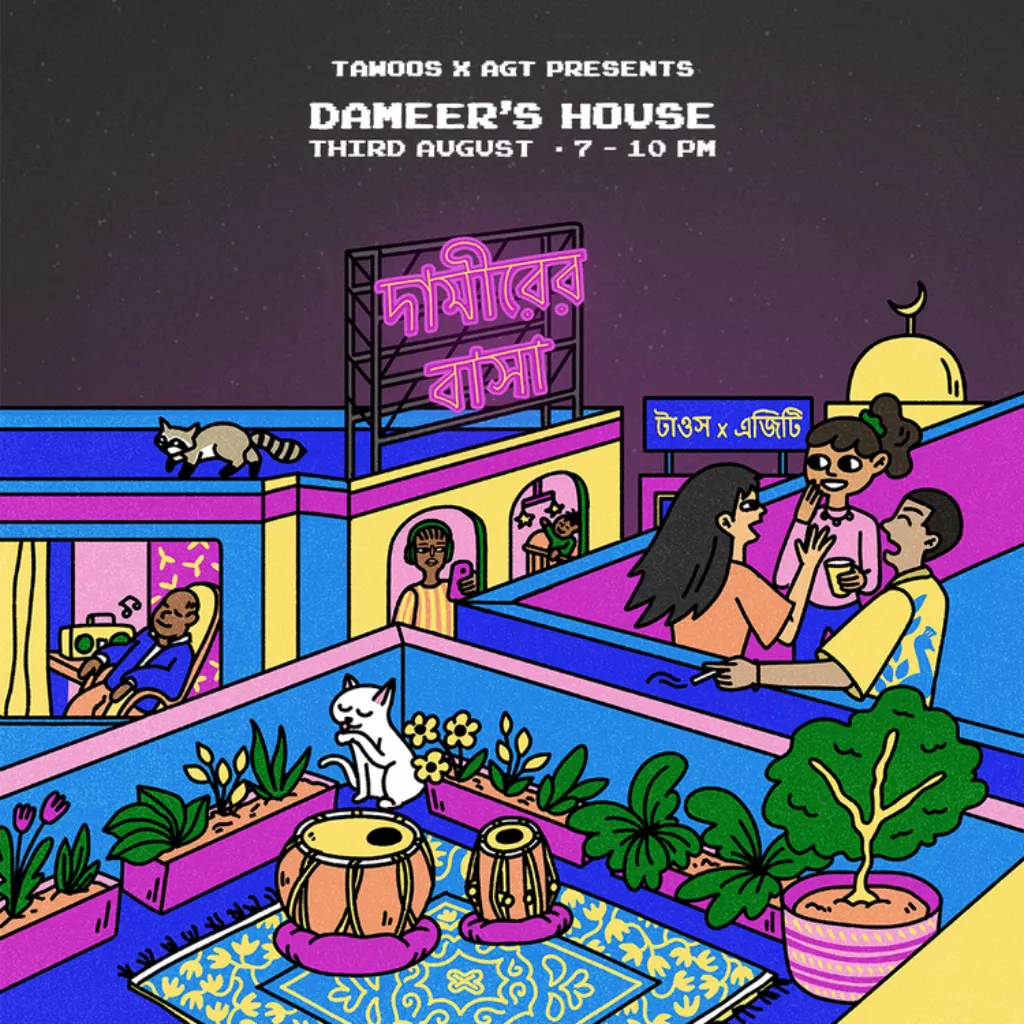
The philosophy underpinning her practice is the creation of a distinct visual sanctuary that honors both her heritage and her contemporary environment. Her journey through the worlds of advertising and surface pattern design has honed her ability to produce polished, compositionally flawless works.
Naureen Islam Emmy
Naureen Islam Emmy captures the essence of Bengali heritage through the fluid, expressive mediums of watercolor and gouache. Her artistic philosophy is grounded in elevating the everyday realities of Dhaka into objects of high aesthetic value. Moving beyond literal representation, Emmy’s journey involves a careful study of opacity and translucency, utilizing gouache to achieve rich color palettes that traditional watercolors cannot always provide.
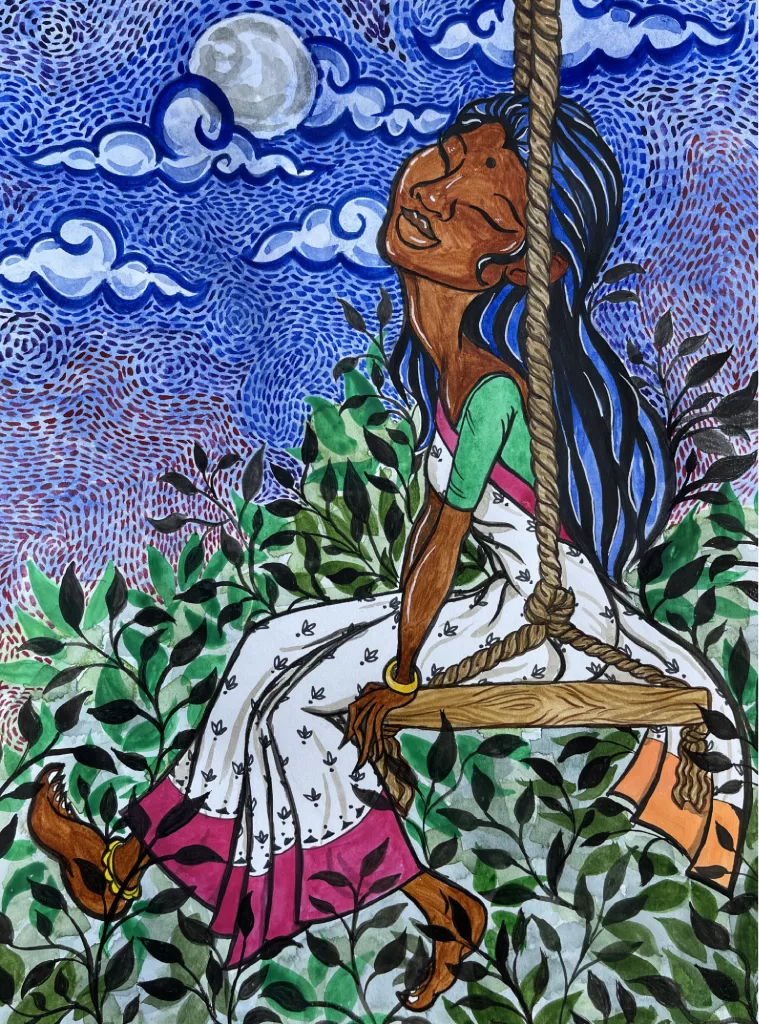
Her subject matter focuses on the culturally rich, atmospheric vignettes of urban life in Bangladesh, presenting them to a global audience with undeniable warmth and sophistication. The tactile quality of her painted strokes and historically attuned color sensibilities translate beautifully into print, offering visually rich testaments to a culture in constant motion, perfect for illuminating literary pages.
These seven artists illustrate that contemporary Bangladeshi visual art is more than a regional movement; it is a critical, globally relevant discourse. Through their profound conceptual rigor and striking visual execution, their compelling works offer essential, reflective interpretations of history, ecology, and identity in the modern world.
References
- https://homegrown.co.in/homegrown-creators/the-revolutionaries-the-romantics-4-bangladeshi-visual-artists-on-our-radar
- https://www.thedailystar.net/life-living/news/5-bangladeshi-artists-you-should-follow-instagram-3316226
- https://www.aiconcontemporary.com/attachment/en/65b96b58105ea3d323069fd4/News/5d814446c7db50260215958d
- https://www.desiblitz.com/content/10-famous-bangladeshi-painters-and-their-paintings
- https://www.artsy.net/article/artsy-editorial-10-standout-artists-dhaka-art-summit-2023
- https://www.thedailystar.net/entertainment/theatre-arts/news/10-bangladeshi-artists-participate-tokyos-kyoiku-bi-hon-ten-exhibition-3717741