

For decades, contemporary interior design was held hostage by the photogenic gaze. We sculpted living spaces destined for digital feeds, prioritizing stark minimalism, symmetrical vignettes, and sculptural statements that looked sublime through a camera lens while quietly alienating the biological organism inhabiting them. We forgot a fundamental truth: a home is not merely a visual portfolio; it is your biological and emotional refuge. It is the skin you wear indoors.
Enter Neuro Feng Shui, a quiet paradigm shift sweeping through high-end architectural discourse. By fusing the ancient spatial geometry of traditional Feng Shui with the empirical rigor of modern neuroscience and environmental psychology, this emerging design philosophy treats your living space not as an abstract canvas, but as your external nervous system.
The Neurobiology of Space
To the uninitiated, Feng Shui is often dismissed as esoteric folklore, a rigid taxonomy of lucky directions and decorative talismans. But strip away the historical symbolism, and you find a sophisticated ancient technology of spatial ergonomics. Modern neuro-architecture proves that our brains are ceaselessly scanning our surroundings for threats. Every angle, shadow, texture, and sightline registers in our brain long before it reaches conscious thought.
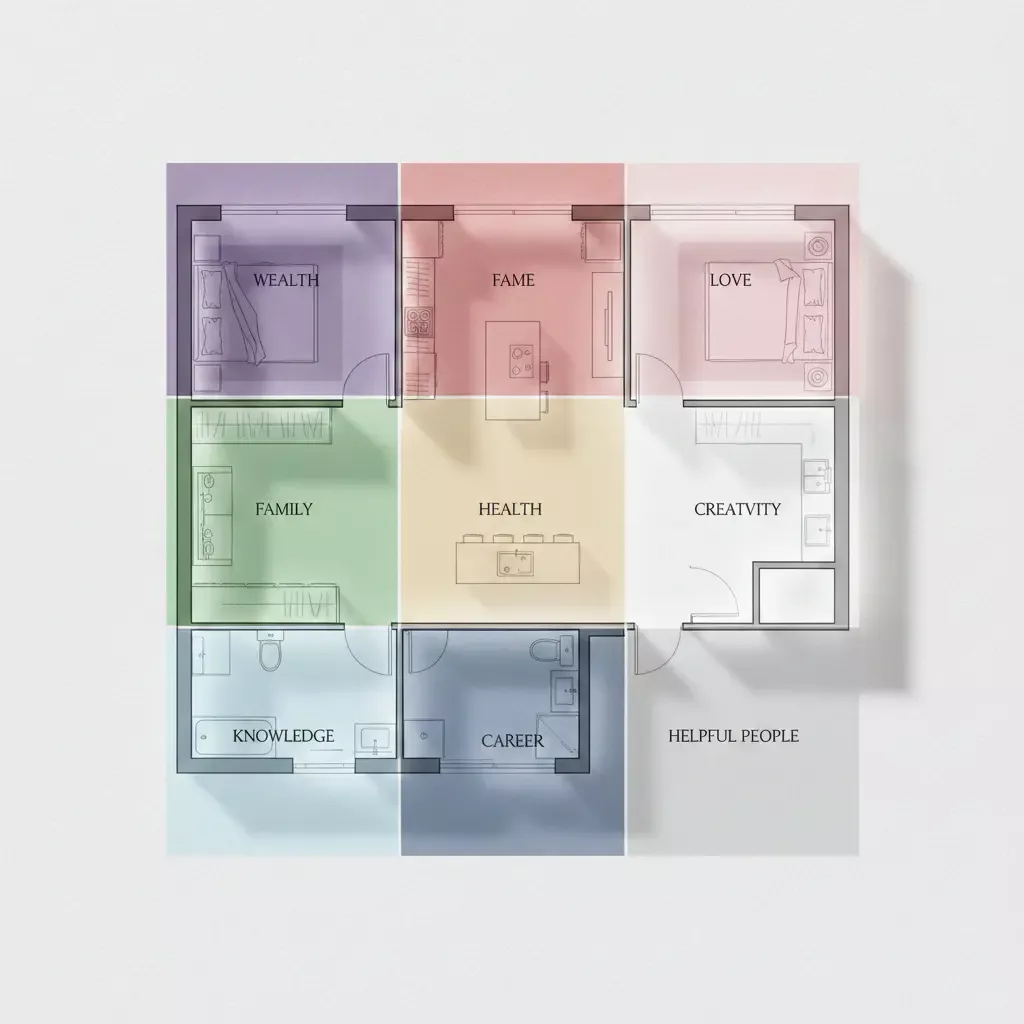
This is where the Bagua map, traditionally viewed as a mystical nine-grid energy blueprint, finds validation in cognitive neuroscience. Rather than treating zones for wisdom, relationships, or health as superstition, Neuro Feng Shui uses the Bagua as a system of psychological zoning. Our brains crave spatial legibility; when one room merges work, rest, and social life, conflicting cues quietly elevate cortisol. By dedicating distinct zones to clear emotional intentions, the Bagua creates predictable sensory anchors that let the nervous system downshift effortlessly.
The Commanding Position and the Neuroception of Safety
One of the foundational tenets of classic Feng Shui is the commanding position, which finds immediate validation in environmental psychology. Whether placing an executive desk or a primary bed, positioning it so that you have a clear, unobstructed view of the room’s entrance while remaining anchored against a solid, protective wall is not about luck; it is about neuroception.
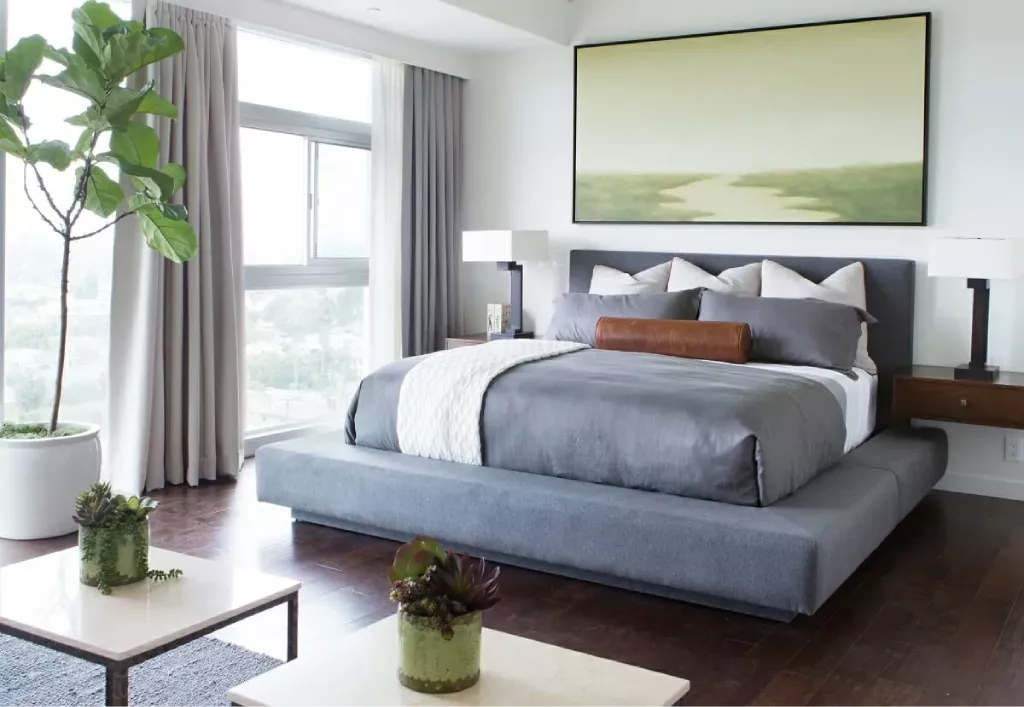
When your back is exposed to an open doorway or a sweeping expanse of glass without a buffer, your brain maintains a low-level evolutionary panic, the hunter-gatherer instinct guarding against unseen predators. By anchoring furniture against solid walls and establishing clear sightlines, Neuro Feng Shui curates a profound sense of psychological sovereignty. You stop looking over your shoulder & your nervous system finally exhales.
Translating the Five Elements into Sensory Design
In a sophisticated Neuro Feng Shui framework, the ancient lexicon of the five elements: Wood, Fire, Earth, Metal, and Water, is translated into tangible sensory inputs that modulate brainwave activity and emotional states.
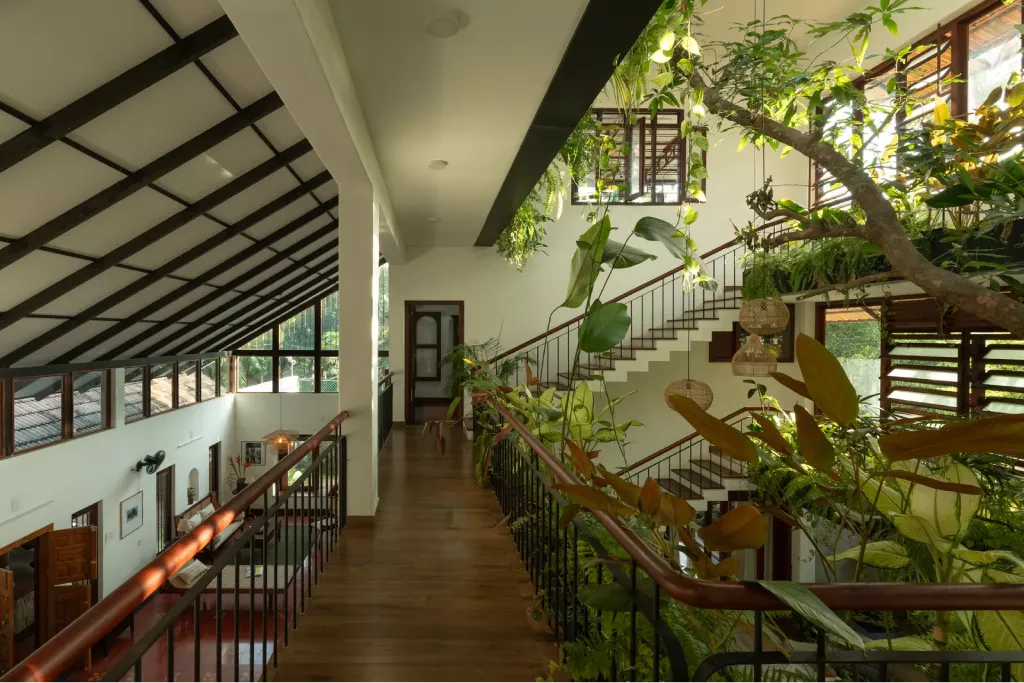
- Wood (Growth and Vitality): Expressed through vertical lines, living botanicals, and tactile timber. Biophilic design principles show that organic wood grains and living plants reduce sympathetic nervous system activation, stabilizing blood pressure and fostering creative clarity.
- Fire (Dynamism and Connection): Manifested through intelligent, layered lighting schemes and warm atmospheric accents. Ditching harsh downlighting in favor of ambient fixtures with warm-toned bulbs shifts the domestic atmosphere from transactional to deeply relational.
- Earth (Stability and Grounding): Channelled through natural stone, unglazed ceramics, and tactile earthen plasters. These high-mass materials provide tactile gravity, anchoring the room and offering reassurance to the tactile-seeking brain.
- Metal (Precision and Focus): Represented by brushed metals, polished surfaces, and structural clarity. Deployed judiciously in home offices and studies, metallic finishes sharpen cognitive processing and reduce mental dispersion.
- Water (Flow and Intuition): Evoked through reflective glass, fluid curves, and muted blue-grey palettes. These elements encourage emotional release and quiet introspection, making them vital for restorative sleeping quarters.
Translating Theory to Blueprint: Global Case Studies
Translating Neuro Feng Shui from abstract philosophy into physical architecture relies on deliberate spatial choreography. Three distinct international projects demonstrate how these principles manifest across vastly different climates and cultures:
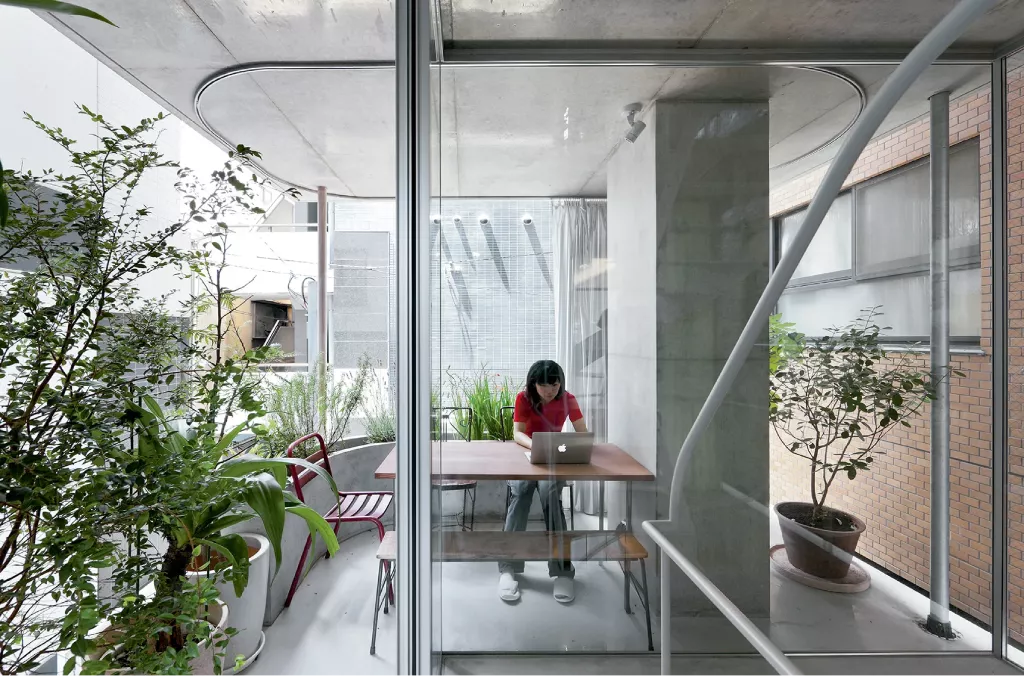
- Garden & House (Tokyo, Japan): Designed by Pritzker laureate Ryue Nishizawa, this slender, four-story vertical sanctuary eliminates solid interior walls in favor of stacked concrete slabs wrapped in thriving potted gardens and sheer curtains. By dissolving the boundary between inside and out, the greenery acts as a living privacy buffer. Occupants enjoy sweeping outward sightlines while feeling sheltered within a micro-forest, dramatically lowering urban sensory overload.
AV - Atri by Naturvillan (Lake Vänern, Sweden): Encased within a self-sustaining timber-and-glass A-frame greenhouse, this Nordic residence anchors its living zones in warm, untreated wood while surrounding the interior with raised botanical beds and unfiltered zenithal daylight. The seamless integration of earth, timber, and natural circadian light regulates melatonin production and counters seasonal cognitive fatigue.

GL - TEN (Moscow, Russia): Conceptualized by Babayants Architects, this serene residence treats spatial transitions as a gentle decompression chamber. Guided by ten human-centric spatial principles, the interior replaces sharp architectural corners and visual clutter with soft earthen plasters, monolithic natural stone, and uninterrupted sightlines toward the surrounding landscape, grounding the nervous system the moment one steps across the threshold.
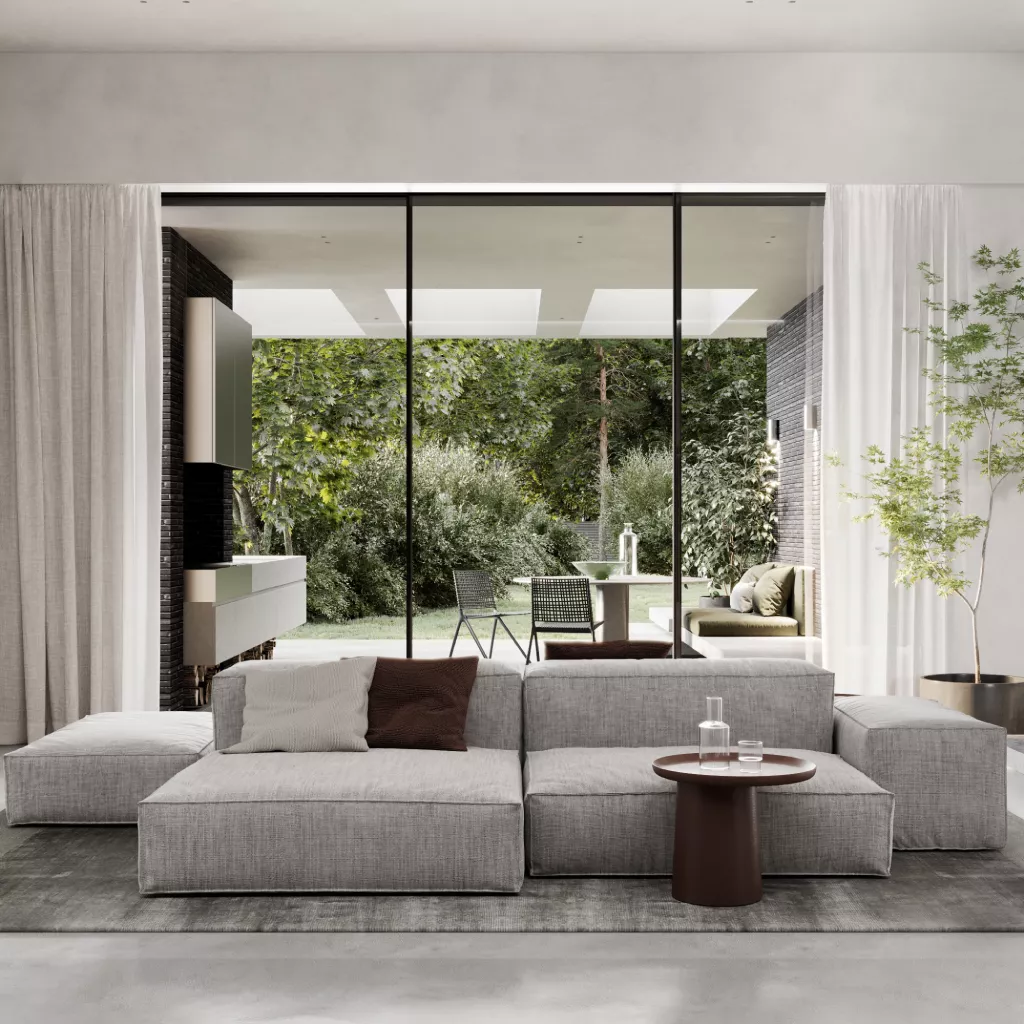
Archilovers
The Choreography of Movement and Cognitive Load
Energy, or Qi, in Feng Shui is essentially the frictionless flow of movement and air through a space. In neuro-architectural terms, this translates directly to cognitive load theory. Navigating a maze of poorly placed furniture, tangled cords, and aggressive obstructions forces the brain to continuously process low-level spatial friction.
A Neuro Feng Shui interior prioritizes unobstructed pathways and breathable layouts. When circulation routes are intuitive and seamless, the brain expends zero energy calculating physical navigation. This invisible ease frees up mental bandwidth, fostering deeper concentration and emotional regulation.
Ultimately, Neuro Feng Shui bridges ancient spatial wisdom with modern neuroscience. True luxury is no longer defined by superficial ornamentation, but by biological resonance, a home that actively protects your nervous system and gives its strength back to you.
References
- https://www.ad-italia.it/article/neuro-feng-shui-quando-la-scienza-aiuta-a-portare-armonia-nella-vostra-casa/
- https://www.architecturaldigest.in/story/neuro-feng-shui-a-look-at-the-new-design-trend-with-ancient-roots/
- https://www.nsinteriors.com/post/interior-design-feng-shui-and-neuroscience
- https://www.admiddleeast.com/story/what-is-neuro-feng-shui-how-science-explains-why-your-home-affects-your-mood
- https://www.moderni-prostor.cz/en/feng-shui/
- https://hopplerdesignbuild.com/trends-and-inspiration/harmonizing-space-the-complete-guide-to-feng-shui-interior-design/
- https://blog.cindrebay.com/harmonizing-spaces-the-art-of-feng-shui-in-interior-design/
- https://www.decorilla.com/online-decorating/feng-shui-decorating-interior-design